// Functional, Usability & Performance
SOFTWARE DEVELOPMENT
We’re committed to your success through innovation
and personalized service
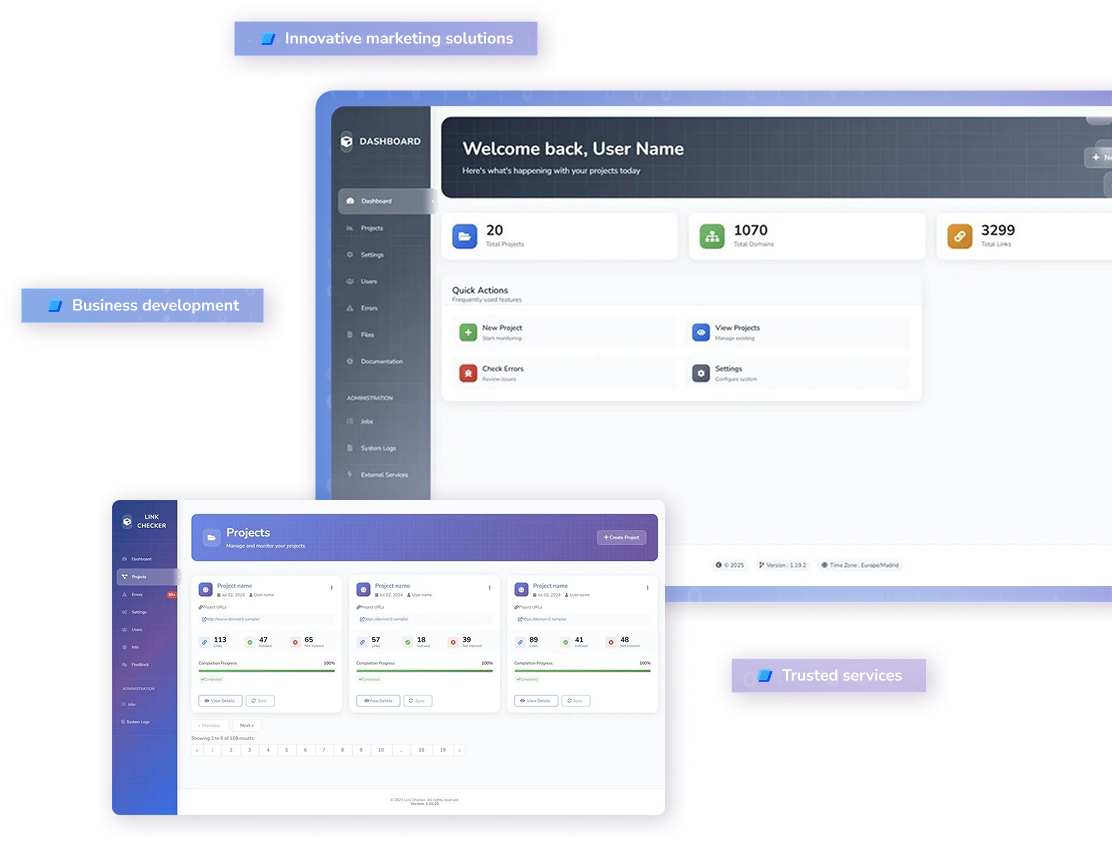

Send your request and we will find an individual solution that will solve your bussines
// Functional, Usability & Performance

At Detenir dashboard platform, we believe in the power of innovation to transform businesses. With a team of 30 skilled professionals based in Cyprus, we specialize in crafting exceptional software solutions tailored to your unique needs. Backed by years of experience, we are committed to driving your success through cutting-edge technology and personalized support.
We ensure you always have the current status and information for the sites of interest.
Monitor brand mentions, site functionality, indexing, and errors with automated checks and detailed reporting.
Boost indexing with Google IndexApi: submit up to 200 pages daily, batch requests, and track bot visits with exportable logs.
Track key metrics of drop domains before purchase with an intuitive new tool.
Gain insights to improve SEO strategies and track online presence effectively.
Streamline client reporting, optimize campaigns, and manage domains with precision.
Enhance website visibility, monitor performance, and make data-driven decisions for growth.
Effortlessly analyze any landing page: review meta tags, keyword usage, images, links, hreflang tags, page speed, and more — all in a single click using our extension.
Get precise keyword reports —monitor rankings, analyze growth-driving actions, and stay alert to critical changes.

Elevate your online presence with custom web solutions designed to engage your audience and drive results.
Ensure the quality and reliability of your software with rigorous testing methodologies and comprehensive QA strategies.
Stay ahead in the mobile-first world with intuitive and high-performance mobile applications for iOS and Android platforms.
Leverage our expertise to navigate complex IT challenges and make informed decisions
for your business.
Transform your ideas into visually stunning and user-friendly
interfaces that
captivate and convert.
Build your dream team of skilled professionals tailored to your project requirements, ensuring seamless collaboration and exceptional results.
A suite of cutting-edge marketing tools tailored to boost SEO performance.
Build the product you need on time with an experienced team that uses a clear and effective design.
Over the past decade, our customers succeeded by leveraging Intellectsoft’s process of building, motivating.
Develop and execute automated test suites to ensure the quality and reliability of our software applications.
We are looking for a talented DevOps Engineer to help us optimize our software development and deployment processes. You will be responsible for automating, monitoring, and maintaining our infrastructure.
Have a project in mind or need more information about our services? Drop us a message using the form below, and one of our team members will get back to you as soon as possible.
27, 25 Martiou Str., D. MICHAEL TOWER, Office 105A, Ekgomi, Nicosia, Cyprus